
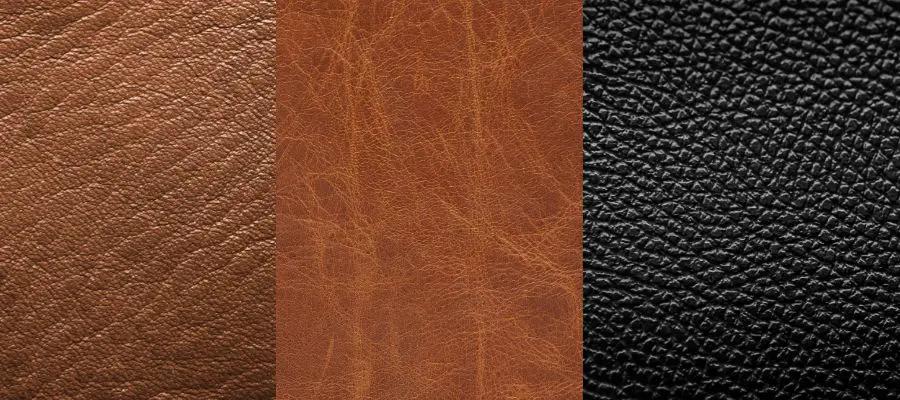
Leather furniture adds comfort, character, and sophistication to any home. But when a sofa starts peeling, a chair develops cracks, or the surface begins to fade, many homeowners face an important question: What type of leather do I actually have?
Not all leather furniture is made from the same material. Genuine leather, bonded leather, and faux leather may look similar when new, but they have significant differences in construction, durability, and repair options.
Understanding these differences can help you make better decisions about maintaining your furniture, determining whether restoration is possible, and avoiding unnecessary replacement costs.
In this guide, we’ll explain how to identify the type of material used in your furniture and why knowing the difference matters when it comes to leather repair.
Genuine leather is made from animal hides that have undergone a tanning process. Unlike synthetic alternatives, it has natural variations in texture, grain, and appearance that make each piece unique.
Depending on the grade and finish, genuine leather can develop a beautiful patina over time. However, regular use, sunlight, friction, and improper cleaning can eventually cause fading, scratches, discoloration, and surface damage.
How to identify genuine leather:
Can genuine leather be repaired?
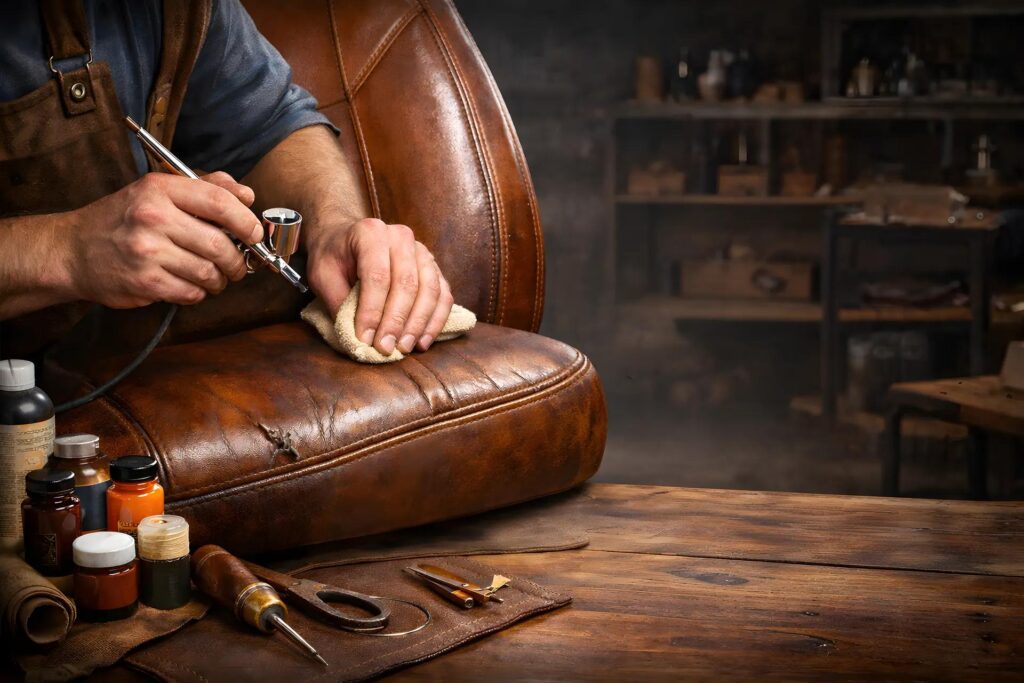
In many cases, yes! Depending on the extent of the damage, professional restoration may address scratches, cracks, fading, discoloration, peeling finishes, and worn areas.
The appropriate repair method depends on the leather type, its finish, and the condition of the damaged area.
Bonded leather is manufactured using leather fibers and other materials combined with adhesives and applied to a backing. A surface coating is then used to create a leather-like appearance.
It is often found in budget-friendly sofas, office chairs, and other furniture products.
Although bonded leather may initially resemble genuine leather, it generally does not have the same durability or restoration potential.
How to identify bonded leather:
Can bonded leather be repaired?
Some bonded leather damage can be improved cosmetically, depending on the condition and construction of the material.
However, once the outer layer begins extensively separating from its backing, traditional leather restoration techniques may not provide a durable solution.
A professional assessment can help determine whether a repair is worthwhile or whether replacement is the more practical option.
Faux leather, also called artificial or synthetic leather, is manufactured to imitate the appearance of natural leather without using animal hides.
Common types include polyurethane (PU) and polyvinyl chloride (PVC) leather.
These materials are widely used in residential furniture, commercial seating, automotive interiors, and other applications.
How to identify faux leather:
Can faux leather be repaired?
Certain surface scratches, small damaged areas, and cosmetic imperfections may be repairable using compatible products and techniques.
However, widespread peeling or deterioration of the synthetic coating can make restoration difficult. The material may continue separating even after cosmetic repairs.
The best approach is to have the furniture evaluated before investing in a repair.
One of the most common mistakes homeowners make is assuming that every leather-looking surface can be repaired using the same products and techniques.
Unfortunately, this isn’t the case.
A restoration method that works well on genuine leather may not adhere properly to bonded or synthetic leather. Using incompatible cleaners, fillers, dyes, or coatings can potentially make the damage worse.
Here are three important reasons to identify your material before attempting repairs.
Choosing the Right Repair Products
Different materials require different preparation methods and repair products. Identifying the surface helps determine which materials are compatible and which techniques are appropriate.
Setting Realistic Expectations
Genuine leather may offer more restoration possibilities than severely deteriorated bonded or faux leather. Knowing the material helps establish what results are realistically achievable.
Avoiding Unnecessary Expenses
Before purchasing replacement furniture, it is worth determining whether the existing piece can be restored. A professional assessment can help you understand the available options and whether restoration makes financial sense.
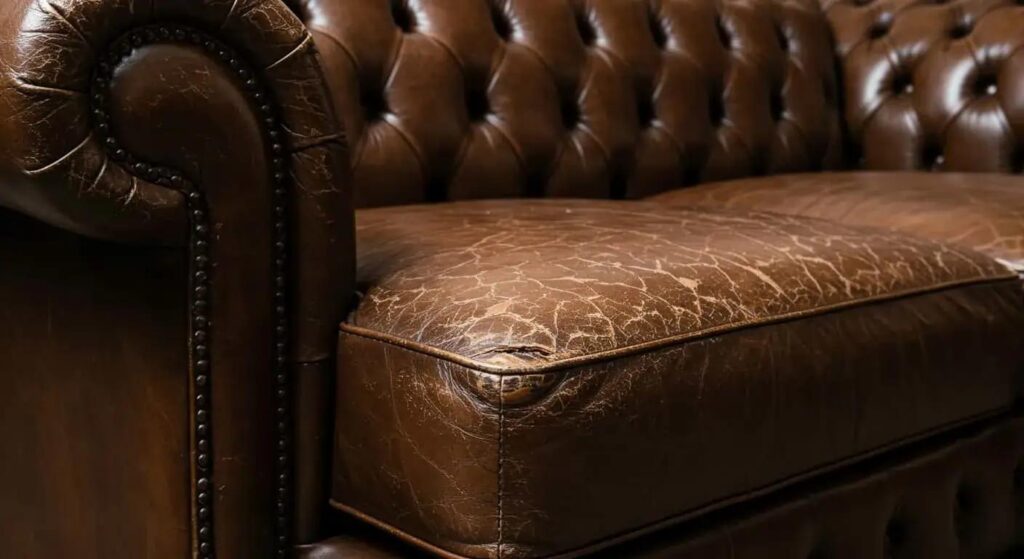
Regardless of the material, certain warning signs indicate that your furniture may benefit from professional evaluation.
Look out for:
Addressing damage early can sometimes provide more restoration options than waiting until the material has deteriorated extensively.
The answer depends on several factors, including the material, the extent of the damage, the overall condition of the furniture, and the cost of restoration.
If you own genuine leather furniture with scratches, fading, worn finishes, or localized damage, professional restoration may be a practical alternative to purchasing a replacement.
For bonded and faux leather, the decision requires a closer evaluation. Minor cosmetic issues may be manageable, while widespread peeling or breakdown of the underlying material may limit the available repair options.
Consider these questions before making your decision:
A professional leather restoration specialist can help answer these questions and recommend an appropriate solution.
Leather furniture is an investment, and visible damage doesn’t always mean it’s time to throw it away. Understanding whether your furniture is made from genuine, bonded, or faux leather is an important first step toward choosing the right restoration approach.
Whether you’re dealing with scratches, fading, cracks, discoloration, or worn surfaces, the right solution starts with identifying the material and assessing its condition.
At San Diego Leather Restoration, we believe in helping customers explore practical ways to restore and preserve their leather furniture. Before replacing a damaged sofa, chair, or other leather piece, consider having it professionally evaluated.
Contact San Diego Leather Restoration today at (619) 538-5592 to discuss your leather furniture restoration needs. Let’s explore whether your furniture can be given a new lease on life!